Kilkenny Castle

Kilkenny Castle is one of the best known and most visited castles in all of Ireland and rightfully so. This massive, beautifully restored castle dominates its section of the city center of Kilkenny. It has been opened to the public after extensive renovations and offers tours as well as access to its park, a haven of beauty, quiet and nature in the busy city center.

Kilkenny formed part of the lordship of Leinster, which was granted to Strongbow. Strongbow’s daughter and heiress, Isabel, married William Marshall in 1189. The Earl Marshall owned large estates in Ireland, England, Wales and France and appointed Geoffrey fitz Robert as seneschal of Leinster. So began a major phase of development in Kilkenny, including the construction of Kilkenny Castle, the first stone castle on the site, construction started in 1195 and was completed in 1213. This was a square-shaped castle with towers at each corner. Three of these original four towers survive to this day.

James Butler, 3rd Earl of Ormonde, bought the castle in 1391 and established himself as ruler of the area. The powerful Butler family were to remain the owners of the castle for over 500 years, until in 1967, after a period of neglect, James Arthur Butler, 6th Marquess of Ormonde, sold Kilkenny Castle to Kilkenny Castle Restoration Committee for £50. The Kilkenny Castle Restoration Committee then handed the castle over to the State and it has since been refurbished and opened to visitors.

The castle is well worth a visit and has a lot to offer its visitors. For art lovers art of the National Art Gallery is on display in the castle and some truly beautiful paintings adorn the rooms of the castle’s walls. For nature lovers the extensive park offers hours of walking along the river or through the woods, where you can find an abundance of birds, waterfowl and squirrels. There is also a lovely play area in the park, for families with young kids.

And finally, for those interested in the paranormal, read more about the castle’s ghosts in Haunted Ireland – Kilkenny Castle

Haunted Ireland – John’s Bridge, Kilkenny

John’s bridge is one of two main bridges in Kilkenny city, situated on the edge of the city center, it offers a spectacular view of Kilkenny Castle and Green’s bridge, a sort distance upriver. John’s Bridge was first built in or around 1200 and has since been rebuilt many times. The current structure has stood since 1910.

During the flood of 1763, Green’s Bridge, a short distance upriver, succumbed to the force of nature and collapsed. Not knowing or perhaps not considering the dangers, a small group of spectators gathered and stood transfixed on John’s Bridge, to observe the events unfolding upriver. Tragically John’s bridge then also collapsed, plunging all who stood on her into the murky, swollen Nore below. Sixteen people died.

Since that tragic day many locals and visitors have reported seeing ghostly shapes, leaning on the walls of the new structure, gazing in the direction of Green’s Bridge, or scrambling in the water below, attempting to mount the river banks.

Few people nowadays, when pausing to enjoy the views offered from this vantage point, know that the bridge played part in a tragedy many years ago. A tragedy that still haunts the city to this day…

Haunted Ireland – Malahide Castle

In 1185 King Henry II of England built Malahide castle for his dear friend Sir Richard Talbot in the pretty seaside village of Malahide, Co. Dublin. The castle has been occupied and used as family homes for around 800 years and over that time collected at least 5 known spirit residents and gained a reputation as one of Ireland’s most haunted spots.

The best known of these apparitions would be the former jester, Puck. In the 16th Century the Talbots always had a jester among their retinue of attendants. One of these jesters, “Puck” by name, was also at that time the resident caretaker, his main function when not entertaining to keep watch and sound the alarm in case of attack. He lived in a turret of the Castle, now known as Puck’s Staircase, where he carried out his duties as watchman. According to legend Puck fell in love with a kinswoman of Lady Elenora Fitzgerald, who was detained at the Castle by Henry VIII at the time, because of her rebel tendencies. One December night the jester was found close to the walls of the castle stabbed through the heart, still dressed in his gay jester suit and cap and bells. It is said that before he died he swore an oath that he would haunt the castle until a master reigned who choose a bride from the people, but would harm no one if a male Talbot slept under the roof.

It is said that Pucks spirit continued living on in the castle, appearing at numerous times over the years when the castle was in danger. His dwarfish figure has appeared in a number of photographs taken in the castle and grounds and many a Talbot family letter makes reference to his continued protection of the castle. Puck’s last appearance were reported during the sale of the contents of the Castle in May 1976.

Another resident spirit said to haunt the castle is the spectre of young Lord Galtrim, Sir Walter Hussey, son of the Baron of Galtrim, who in the 15th Century was killed in battle on his wedding day. It is said that Lord Galtrim wanders through the castle at night, groaning and pointing to the spear wound in his side. It is said he haunts the Castle to show his unhappiness towards his immediately widowed bride, who wasted little time marrying Lord Galtrim’s rival after the lord himself lost his life in defence of her honour and happiness.

Lord Galtrim’s widow, Lady Maud Plunkett is said to haunt the castle as well, but as she looked in later years, when she married her third husband, a Lord Chief Justice. During this time she had become notorious as an un-equalled virago, and her ghostly appearances chases her husband through the corridors of the castle.

Another of the castle’s ghosts is that of Miles Corbett, the Roundhead to whom Cromwell gave the castle and property during his protectorate. At the Restoration Miles was relieved of his property and made to pay the penalty of the many crimes he had committed during his occupancy, which included the desecration of the chapel of the old abbey near the castle. He was hanged, drawn and quartered and when his ghost first appears it seems to be a perfectly whole soldier in armour, which then falls into four pieces before the eyes of anyone who has the unpleasant experience of meeting it.

The 5th recorded ghost is that of the unnamed White Lady, of whom a painting hung in the Great Hall of the castle for many years. Nobody appears to know her identity or the identity of the artist who portrayed her. According to legend from time to time she would leave her painting and wander through the castle in the quiet of the night. Many people have reported sightings of this mysterious lady’s ghost.

In the castle grounds is a field known as Our Lady’s Acre, which is also reputed to be haunted. On a few occasions two grey-haired, sad-faced ladies have been seen on the field, wandering aimlessly. Some sources suggest that they are ghosts of Danish women who never found rest after the Norman Talbot drove the Danes from Malahide.

Haunted Ireland – Kilkenny Castle
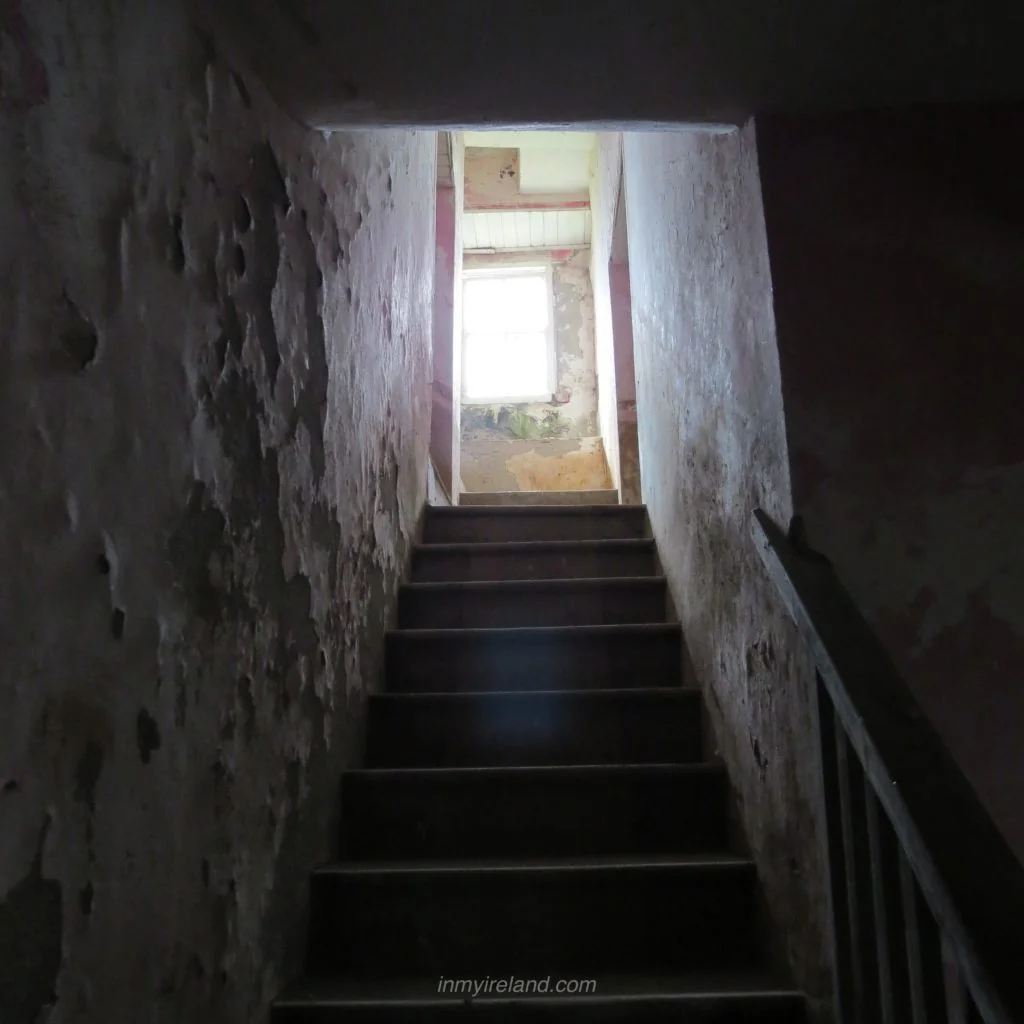
Kilkenny Castle plays host to a number of ghost stories, unsurprising really, given that there has been a castle on the site in one form or another since 1195 and, like most of the ancient buildings in Ireland, it has seen its share of deaths and tragedy.

Kilkenny Castle was home to the Butlers of Ormonde until it was sold to a Castle Restoration Committee in 1967, before being passed into the hands of the OPW. There are as many as 41 ghosts rumored to roam its grounds, many of them said to be of the Butler family. The most frequently sighted being the castle’s “white lady” who has often been seen roaming the castle’s gardens and adjacent river banks below. She had also been seen wandering the corridors and staircases and is speculated to have been inadvertently photographed in 2010 by two teenager visiting the castle, shortly after a reported sighting by a young boy in the same spot. Kilkenny residents believe this spirit to be that of Lady Margaret Butler, who was born in the castle in either 1454 or 1465. She married Sir William Boleyn and through her eldest son Thomas, was the paternal grandmother of Anne Boleyn, second wife of King Henry VIII of England.

More discreet hauntings include an electronic counter in the Parade Tower, used for counting visitors to the thirteenth century part of the fortress, which continues to count up to a hundred visitors during the night hours, while the tower is locked and out of public reach. The tower sits over what was formally a dungeon, where it is said many poor souls would have been imprisoned before passing away.

Also see:  Haunted Ireland – John’s Bridge, Kilkenny


Leamaneh castle, County Clare

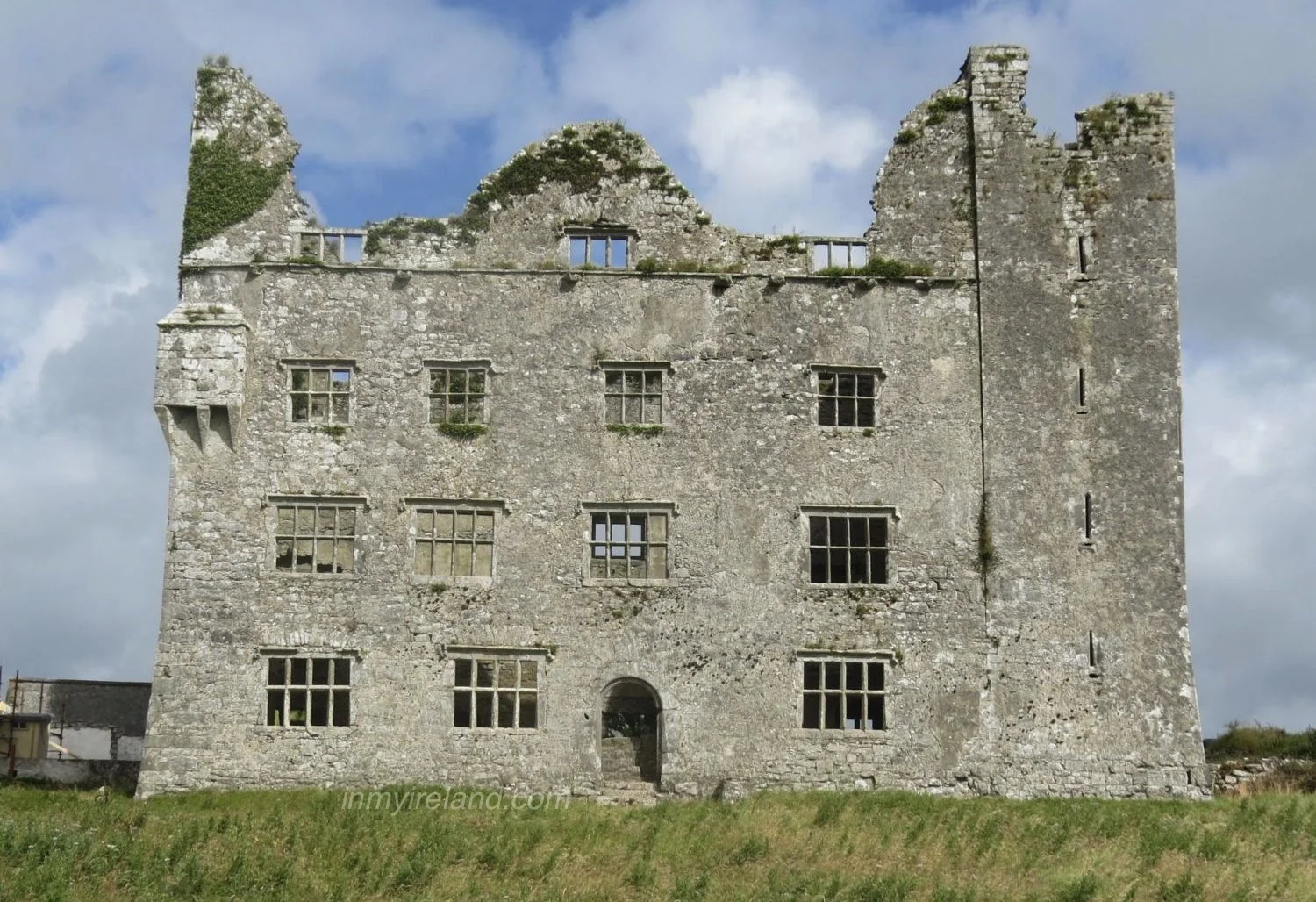
Leamaneh castle is a well known landmark in the Burren, situated on a crossroad between the villages of Corrofin and Kilinaboy, it can be viewed from the roadside, but due to it’s state of disrepair and location on private farmland, is not accessible to the public. It is however highly recommended as a quick stop during a visit to the curious Burren.

The castle’s name “Leamaneh” is believed to be derived from the Irish léim an éich which, translated into English means “the horse’s leap” or léim an fheidh (“the deer’s leap”). It was built circa 1480-90 as a 5-storied Irish tower house, probably by Toirdelbhach Donn MacTadhg Ó Briain, King of Thomond of the O’Brien family, one of the last of the High Kings of Ireland.

In 1543, Turlogh Donn’s son, Murrough surrendered his title of King to Henry VIII and was created in 1st Earl of Thomond and Baron Inchiquin. In 1550, Murrough gave Leamaneh castle to his third son, Donough, who was hanged in Limerick in 1582 as a rebel.

In 1639, Donough’s grandson, Conor O’Brien, married the castle’s most famous owner, Máire ní Mahon (MacMahon), better known as Máire Rúa (“Red Mary”). She was the daughter of Sir Torlach Rúa MacMahon, Lord of Clonderlaw and her mother was Lady Mary O’Brien, daughter of the third Earl of Thomond. Her first husband, Daniel O’Neylan of nearby Dysert O’Dea Castle, died young and upon his death, she gained control of his substantial estate and a £1,000 fortune. This wealth enabled her and Conor to build a more comfortable mansion on to the original tower house at Leamaneh around 1648.

Brave Máire accompanied her husband on raids against English settlers, but in 1651, he was mortally wounded fighting on the Royalists’ side at Inchicronan (Crusheen). Máire, realizing that the punishment for his rebellion against the English would be the forfeiture of their property, put on her finest dress and drove her carriage to Limerick city, where she offered to marry any Cromwellian officer who “had the courage to ask for” her hand.

The brave man who became Máire’s third husband, Cornet John Cooper was a Cromwellian soldier and through this marriage she successfully retained her estates. Cooper left the army and amassed some wealth through land and property speculation. However, he later ran into financial difficulty and, as a result, the estate which he had married into at Leamaneh, which he under law now owned through his wife, was mortgaged to repay his debts. According to legend, Máire murdered him one night when he was drunk, by throwing him out of a window at Leamaneh castle.

During the 1660s, Cromwellian troops were stationed on and off at Leamaneh castle. Máire Rúa’s son, Donagh or Donough (after 1686 Sir Donat) stayed there until 1684/1685, when he moved the family seat from Leamaneh to the much larger Dromoland Castle in Newmarket-On-Fergus, south of Ennis.

Leamaneh had various occupants in subsequent years, but the house finally fell into ruin at the end of the 18th century. The barbican-like gates which used to adorn the entrance to the property were moved to Dromoland Castle in 1906 or 1908 by Lord Inchiquin. They are still in the grounds in there.

The most elegant of the fireplaces of Leamaneh castle was relocated to the “Old Ground Hotel” in Ennis, where it can still be found today.

Nearby castle:  O’Dea Castle – County Clare

Kilbline Castle, County Kilkenny

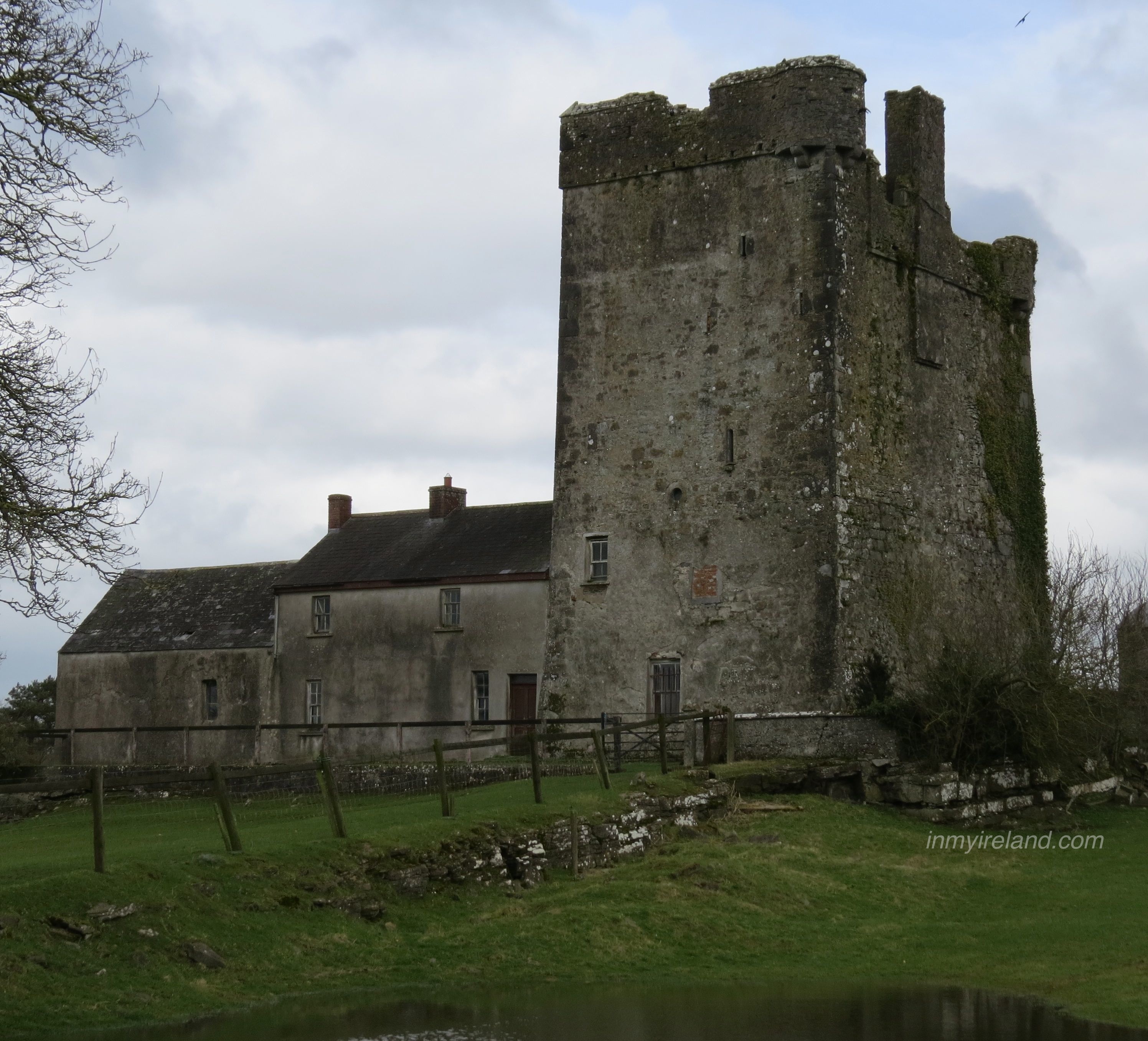
Kilbline castle and its attached 2-storey house is situated approximately 1 mile from Bennetsbridge, Co Kilkenny. It is not open to or accessible to the public, but its current owners kindly gave me a quick tour of the building  and some information on its history.

Kilbline castle was built in 1539 and records from the era reference to it being forfeited by one Thomas Comerford of Ballymac in 1566. Subsequent owners have been members of the Shortall family of Rathardmore Castle in the same county. Thomas Shortall of Rathardmore died in 1628 and shortly after his heir Peter moved to the castle of Kilbline. His substantial estates, which ran to around 1,500 acres were declared forfeited by the Cromwellian government in 1653 and his sons ordered to be sent to Connaught. In later years, it’s believed to be after the restoration of Charles II in 1660, one of the sons seem to have returned to Kilbline.

Kilbline once more changed hands during this period when William Candler, originally from Newcastle in Northumberland, was granted lands in County Kilkenny, including those on which Kilbline Castle stands. He is believed to have served as an officer in Oliver Cromwell’s army during the Irish wars of 1649-53 and as a reward for his endeavors, was promoted to the rank of Lieutenant Colonel and granted these lands as result. He and his wife Anne Villiers had two sons, the younger of whom, John lived at Kilbline.


An interesting side history here that is worth mentioning: John’s son Thomas lived at Callan Castle. He had four sons, the youngest of whom Daniel, married an Irishwoman, possibly a Roman Catholic, called Hannah, and as a result was obliged to leave Ireland. Around 1735 Daniel and Hannah Candler moved to the USA, initially settling in North Carolina before moving to Bedford, Virginia. Their great, great, great-grandson was Asa Griggs Candler, the entrepreneur who in 1888 bought the formula for the well known soft drink Coca Cola.

According to it’s current owners Kilbline Castle continued to be occupied with a Ryan family living in the castle until 1840, before marrying into the Lannon family, who occupied the castle until 1979. At some point a two storey three-bay house was added on the west end of the tower house and a further single storey structure adjoining this. The interior of the house remains relatively intact  and though the current owners mentioned no plans are in place currently to restore the castle, measures have been taken to “keep the rain out”.

Much of the castle, due to the questionable condition of some of its floorboards, were inaccessible for safety reasons, but I did get to visit the delightful and architecturally significant paneled room on the south-east corner of the ground floor. Most likely of oak this looks to date from the late 17th or early 18th century. All the wall paneling is intact and in remarkably good condition. Overall the interior of the castle is in fair shape and it was an absolute joy to visit and photograph.

Amazing Places in Ireland – Glendalough, Co Wicklow

Glendalough is a place I much enjoyed visiting and a place I’d highly recommend to any visitor to Ireland. Close enough for a day-trip from Dublin or Kilkenny, it’s peaceful, beautiful and family friendly. Perfect for a day out in some of Ireland’s most beautiful countryside.

With its ancient graveyard,  beautiful lakes, peaceful forest and abundant wildlife, Glendalough has a lot to offer in terms of history, monuments, archaeology, architecture, landscapes, geology, parks, flora, fauna, wildlife habitats and mining history. The valley is also home to one of Ireland’s most impressive monastic sites, founded by St. Kevin in the 6th Century.

If you enjoy walking in beautiful natural settings or forests, Glendalough is a must! We spent some time wandering around the well kept footpaths, through the forest and along the edge of the lake, where I was delighted to meet this curious, fairly tame, deer, that came out of the trees to say “hello”.

For fanciers of ancient grave sites and history, there are some amazing old tombstones dating back centuries and incredible old ruins. I personally found it a little upsetting that some of the footpaths around the grave site went right over graves though. Care should be taken when wandering around the area.

Glendalough is accessible year-round and entrance to walkways, lakes and sites free of charge. We found parking hard to find, due the high number of cars already there when we arrived, so plan your visit to arrive early if possible.

There are a number of restaurants and cafes in the region that offers lunch and if you fancy staying a night, accommodation is offered in B&B’s, hotels etc in the region. For more info on these, visit http://www.glendalough.ie

Tickincor castle

“The House at the Weir” (In Gaelic, Teagh-an-Corr), now known as Tickincor Castle, was once a once formidable three-storey fortress built during the reign of James I.  About 3 miles from Clonmel, it is situated on the south bank of the river Suir, on the Tipperary/Waterford county border.

This former stronghouse was built by Alexander Power in c.1620. It passed to Sir Thomas Stanley and then in the 1650s to Sir Nicholas Osborne. His descendants continued occupying the castle until the late 18th century, when they moved to Newton Anner in Tipperary. Its last inhabitant, Sir John Osborne, died in 1743.

Today all that remains of this once beautiful castle is ruins in a spectacular setting on the banks of the river Suir. Well worth the short drive to see it, the castle is adjacent to a privately owned and occupied property and not open or accessible to the public.

Amazing Places in Ireland – Ballykeeffe Amphitheatre, Co Kilkenny

What do you do with an abandoned limestone quarry near the Tipperary border at Ballykeeffe, Co Kilkenny?

Abandoned by Kilkenny County Council as a source of road-making materials, the quarry became a dump for old cars, furniture and other rubbish, while becoming a repository for beet being supplied to Thurles sugar factory. Rock climbers saw the potential for sports on the quarry’s rugged edge in time and the quarry soon attracted rock climbers from all over Ireland.  In 1999 the Mountaineering Council of Ireland adopted a policy of accepting bolted protection in quarries where traditional climbing had not previously taken place and Ballykeeffe quarry became a sports-climbing venue and the only area with full bolted protection in Ireland.

The sudden interest and visitors to the quarry caught the attention of the locals, who soon realized the potential of the quarry and it’s spectacular setting. The end of the last century plans were unveiled by KBK, the local enterprise group, to turn the quarry into an entertainment venue. The rubbish, beet and cars were removed as a Millennium project and Ballykeeffe Amphitheatre was born.

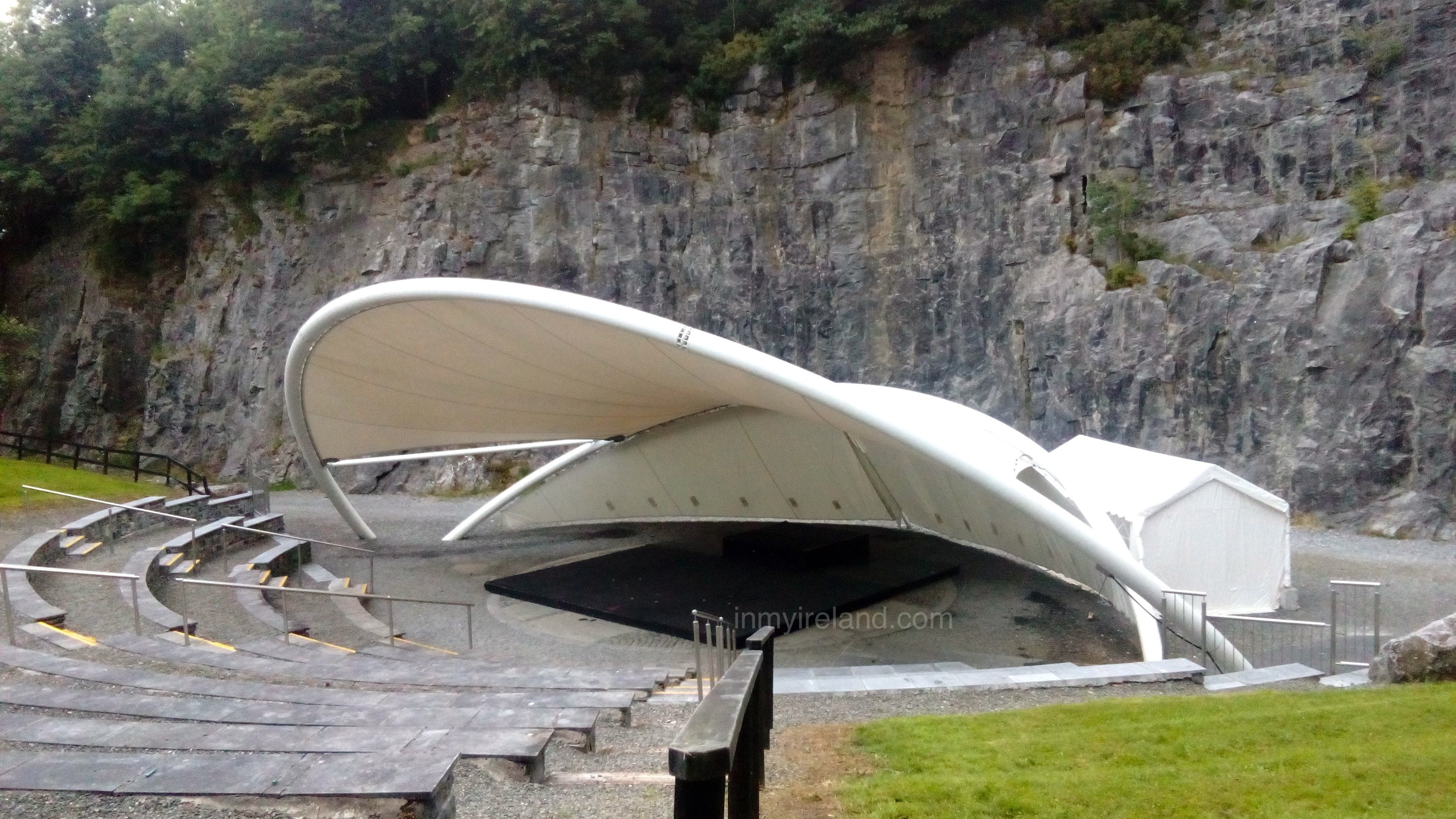
In 2011, the original makeshift stage was replaced with an innovatively designed, outdoor stage costing €100,000 – the first of its kind in Ireland. The venue now has no difficulty attracting quality Irish and overseas acts, while still playing host to rick climbing enthusiasts and for the less adventurous, offers walks in the attached nature reserve. It certainly is worth a visit for the spectacular views alone!

For more information, as well as scheduled acts and performances in the amphitheatre, visit http://ballykeeffeamphitheatre.com